
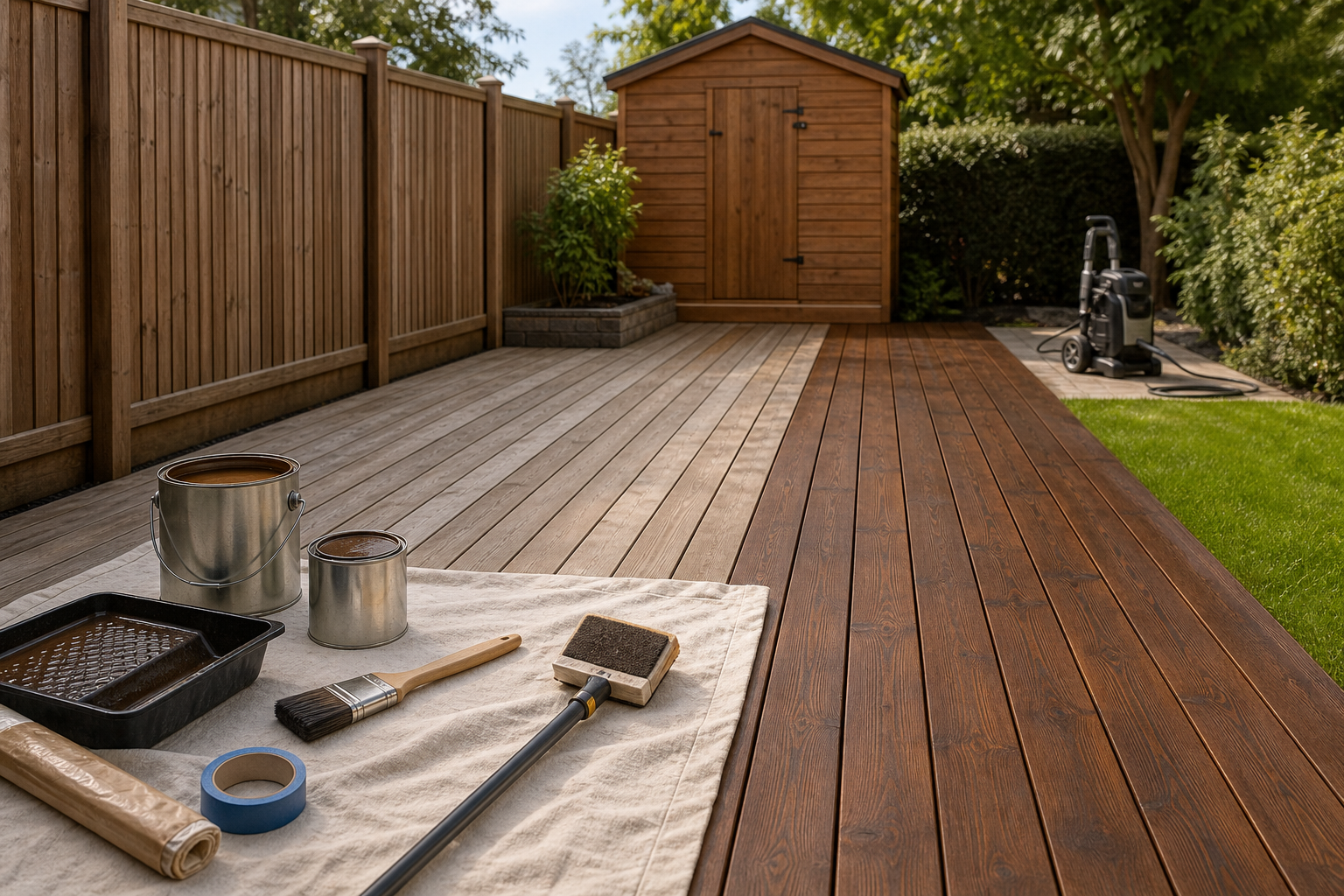
The difference you'll notice once the job's done
Stain chosen for the timber
We match the finish to the wood's condition and previous coating. That gives you a result that looks natural and lasts longer.
Prep that does the heavy lifting
Cleaning, drying and light abrasion are not optional extras for us. They're the reason the stain bonds properly and wears more evenly.
Clear advice before we start
We'll tell you if staining is the wrong route for tired timber. That helps you avoid paying for a finish that won't hold up.
Give outdoor timber a fighting chance
Deck staining sinks into the timber instead of sitting on top like paint, which helps show the grain while adding protection against rain, damp and UV fade. We carry out this work as part of our exterior decorating service, and at Innocon Group Ltd, we make sure the finish suits the condition of your wood rather than forcing a one-size-fits-all approach. Fences, decking and sheds can all be suitable for staining, but bare timber, old stain and previously painted boards each need a different plan. Proper preparation matters just as much as the stain itself, especially when algae, moss and grime have built up over time. We can arrange pressure washing where needed, allow the timber to dry fully, then abrade the surface and deal with small surface issues before the first coat goes on. That means you get a finish that looks better on day one and stands up better through wet, windy winters in Edinburgh.
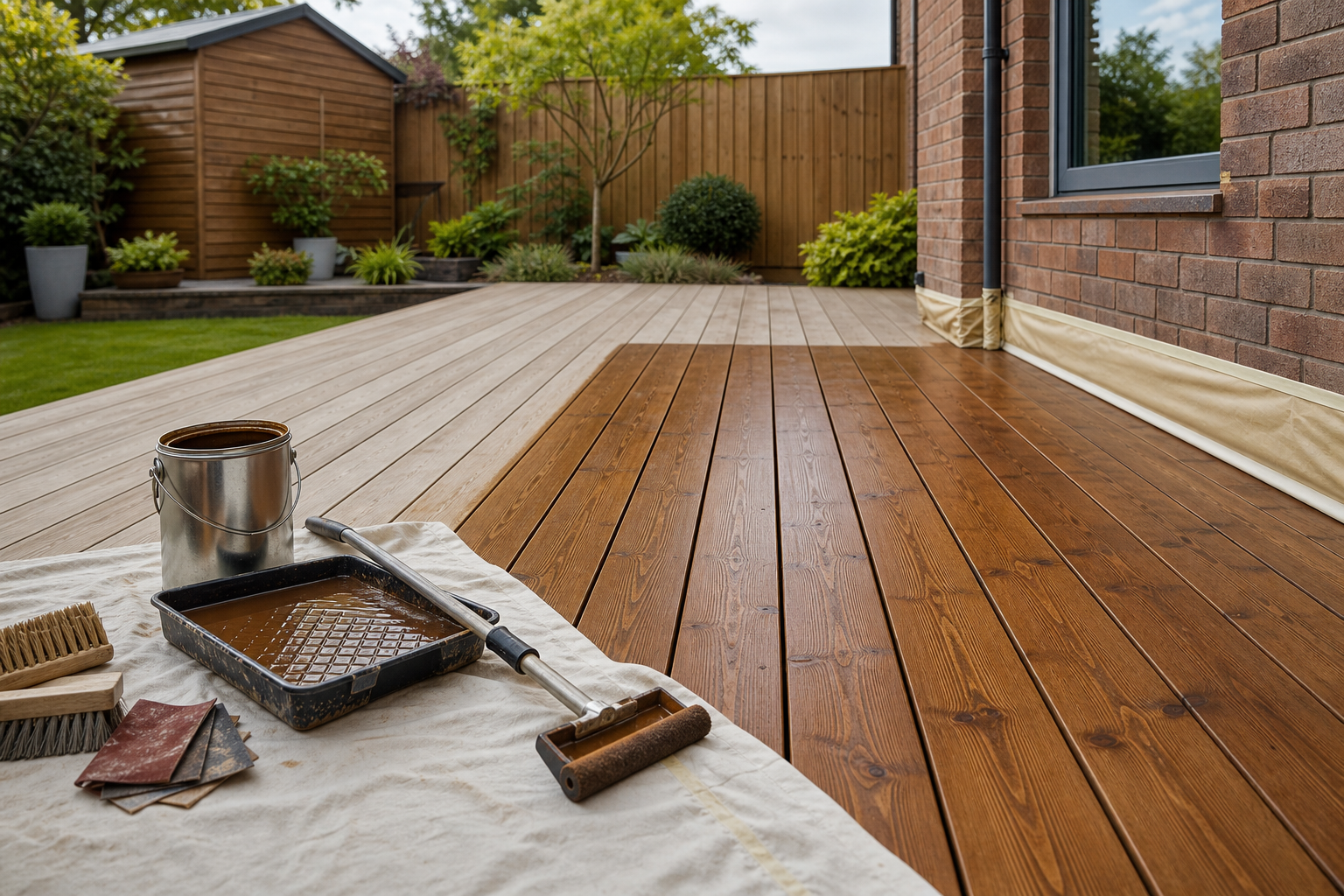
What to expect before the first coat goes on
Your choice of finish changes the final look more than most people expect, because a transparent stain keeps the grain in view while a solid stain gives stronger coverage and more colour impact. We help you weigh that up at Innocon Group Ltd by looking at timber porosity, previous coatings and how exposed the surface is to the weather. Most jobs need more than one coat, but the exact number depends on how thirsty the wood is and how evenly it absorbs the product. We also plan around access, protect nearby paving and planting, and schedule the work for suitable weather because exterior staining doesn't reward impatience. If boards are rotten or old paint is flaking badly, we'll tell you plainly when repair, stripping or repainting makes more sense than staining.
Frequently asked questions
What is the difference between deck staining and painting?
Stain soaks into the timber and helps protect it from moisture and UV exposure while still allowing some of the wood character to show through. Paint forms a surface layer with fuller coverage, which can be the better option if the timber has already been painted or needs a more uniform finish.
How long before I can use my deck after staining?
That depends on the product used, the weather and how quickly the timber dries after preparation. In general, you should expect to keep off the deck until the stain has dried and cured properly, because early foot traffic can mark the finish.
When is staining not the best option for outdoor timber?
If the surface has heavily flaking paint, staining usually won't give a sound or even result until that coating is removed. Timber with rot or loose boards should also be repaired or replaced first, because stain can't solve structural problems.